Flooding Recovery Assistance
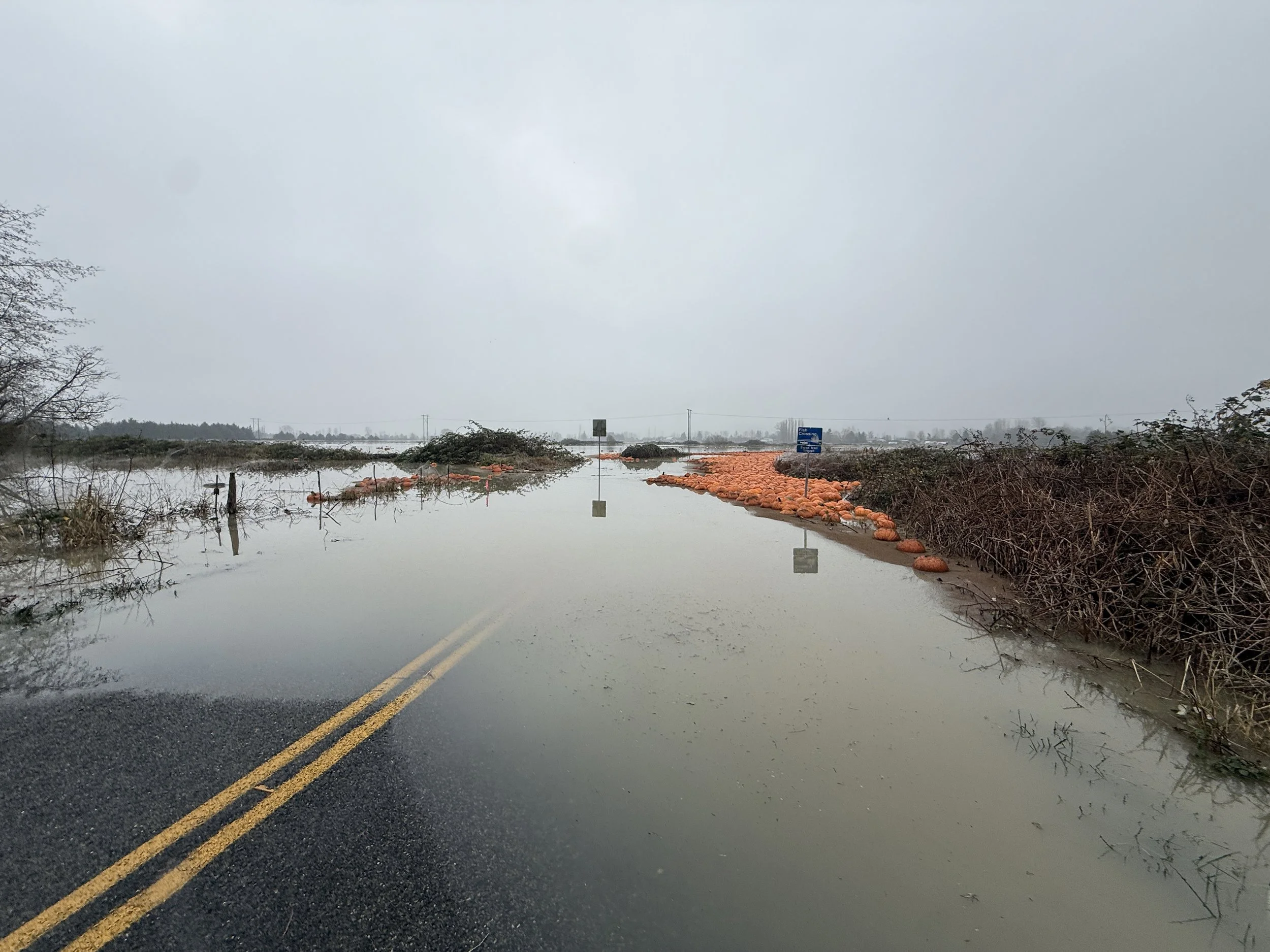
In December 2025, Snohomish County and Camano Island experienced historic flooding following a series of intense storms and atmospheric rivers. We’ve gathered flood recovery resources to support those affected, and this page will be updated as new resources become available.
We Are Here to Help!
Our staff can support you as you navigate recovery efforts on your farm or property. Click the Request Assistance button to connect with a staff member.
Take Photos of Flood Damage
For many insurance claims and financial assistance applications, you need photo documentation of flood damages to your home, business, or farm.
Capture damages before any repairs or emergency work begin, and again after repairs are completed.
Use geo-tagged or GPS-located photos whenever possible.
Take wide-angle photos for context and close-ups for detail.
Include a scale reference (cone, tape measure, ruler).
Document inaccessible damage using aerial/drone imagery or by noting why the area cannot be reached.
Report December Flood Damage
Snohomish County Department of Emergency Management has an online survey to help residents report damage from the historic flooding that occurred on local river systems. The online survey will remain open through late January 2026. The information may help make the case for disaster recovery resources, and it needs to be provided quickly.
General Flooding Resources
Snohomish County Public Safety Hub
For up-to-date information on sheltering, evacuations, real-time response, and how to help your neighbors.
Snohomish County Flood Information Center
Snohomish County Roadways Historically Closed Due to Submersion
Quickly find information on what to do before, during, and after a flood
Learn about federal grant programs that can help homeowners pay for long-lasting flood protection
Business Resources During Flooding & Natural Disasters
The Economic Alliance of Snohomish County has compiled a list of resources for businesses during natural disasters, with an emphasis on flooding assistance.
Snohomish County Solid Waste Voucher Program
The initial 30-day program will run through Sunday, January 18, 2026.
Snohomish County residents and farmers impacted by recent flood conditions can now dispose of flood-damaged household items at no charge at county solid waste facilities through its flood voucher program. Visit the County Solid Waste Management website for additional information on flood vouchers, facility locations, and hours.
After Flood – Diesel and Other Fuel Disposal
If you have containers of gas, diesel fuel and oil, or other chemicals affected by floodwater, you can dispose of it for free at the SnoCo Solid Waste Household Hazardous Waste Facility.
Septic system or well contamination
To seek advice or report septic system damage or well contamination, call the Snohomish County Health Department at 425-339-5250 for assistance.
Keep rats out of your toilet and sewer pipes
Flooding or heavy rains may drive rats into the side sewer lines that run from your house to the street. Kitchen pipes are too small for rats, so instead, they'll try to come up through your toilet.
Wet Hay Bales Can Self-Combust
If you have hay or straw that got wet during the flooding, it is at risk to start a fire. Every year barns burn down from wet hay that begins to decompose, generating heat, and can combust. Even if you think your bales are dry, go check them again; they may have absorbed water from the bottom. If bales feel warm or are wet, please take action.
Remove bales from buildings to prevent fire, unroll them and spread them out on dry ground to allow oxygen to circulate.
Do not feed flood-damaged hay to livestock as it presents a health risk.
Topsoils Northwest Inc. in Snohomish is accepting flood-damaged hay and straw from farmers, free of charge. Remove strings first!
Agricultural Flooding Resources
Snohomish County has compiled a list of flood recovery support for farmers. Some of the information here may be duplicated on that site.
Farmer Flood Relief Fund Grant Applications
The Farmer Flood Relief Fund, administered by the Snoqualmie Valley Preservation Alliance (SVPA) in coordination with regional partners, is a one-time emergency relief program created in response to the December 2025 flooding. This fund provides rapid, short-term financial assistance to commercial farms in King County and Snohomish County that experienced flood-related impacts.
The first round of applications opens, January 16, 2026, and will be reviewed on a rolling basis. Anticipated award decisions for the first round will be made by February 15, 2026. Applications will continue to be accepted through March 1, 2026,
Washington Soil Health Initiative Resources
A compilation of resources available to support Washington farms affected by severe, historic flooding.
AgriSafe Network
Resources on pollutants like sewage, oil, pesticides and insecticides after floods for farmers and how to avoid them.
American Federation of Aviculture (AFA)
Bird owners affected by flooding can reach out to AFA for disaster assistance. Please send an email to: Disasterrelief@AFAbirds.org or submit an application.
Emergency Relief Programs at the USDA Farm Service Agency
USDA and WSDA have several emergency relief programs that can help with post-flood recovery, including loss and damage coverage.
Contact your local FSA office as soon as damage occurs—early reports are required to access funding, even if details are limited. If your farm is not already registered with USDA, they can help start that process.
For Snohomish County residents, please contact Kara Christensen at kara.christensen@usda.gov or (360) 592-6097 or Christina Christian at christina.christian@usda.gov or (360) 428-7684 ext. 2.
Before applying: Document all damage and losses with date-stamped photos. Phone cameras record dates automatically. If you are using a camera, make sure it is set to the correct date.
Emergency Conservation Program (ECP)
Covered practices:
Removing debris from farmland
Grading, shaping, or leveling land
Restoring permanent fences
Restoring conservation structures
Payment Rates: ECP provides cost-share assistance of up to 75% of the cost of approved conservation practices. Limited resource producers may be eligible for up to 90% cost-share.
Do not begin restoration work for the above covered practices until after a contract is signed and approved and you are given the green light. Please note that this process can take up to 6 months or longer.
Emergency Assistance for Livestock, Honeybees, and Farm-Raised Fish Program (ELAP)
Covers flood-related losses such as:
Feed and forage losses
Flood-related grazing losses
Honeybee hive, colony, and feed losses
Payment rates vary by loss type.
Livestock Indemnity Program (LIP)
Provides payments for livestock deaths exceeding normal mortality due to flooding. Payment rates are based on the fair market value of the livestock.
Emergency Farm Loans
Emergency Farm Loans offer crucial financial support to farmers and ranchers impacted by natural disasters. These loans can be used to help restore or replace property, cover production costs, pay essential living expenses, or refinance certain debts. Available to producers in disaster-designated counties who cannot obtain sufficient credit elsewhere.
Loan availability is typically announced within several months of disaster designation.. Sign up for WSDA's Regional Markets newsletter to stay updated.
Noninsured Crop Disaster Assistance Program (NAP)
NAP provides financial assistance to producers of non-insurable crops when low yields, loss of inventory, or prevented planting occur due to natural disasters.
Tree Assistance Program (TAP)
The Tree Assistance Program (TAP) is administered by the Farm Service Agency (FSA) and helps pay for replanting or rehabilitating eligible trees, bushes, and vines that produce annual crops and were damaged or destroyed by natural disasters.
Applicants must provide documentation of losses and meet all program requirements
Covers up to 65% of replanting or rehabilitation costs
Apply through USDA Farm Service Agency (FSA) and have an approved contract before beginning any work
Eligible plantings must have experienced more than 15% mortality (adjusted for normal losses)
